

Can Your Brand Afford Sonic Anonymity?
Best Audio Brands 2026 report reveals how effectively brands use sound across their communication, finding a shocking 62% to rely on stock music; Bjorn Thorleifsson, amp’s director of research and insights unpacks what the weakest performers are getting wrong
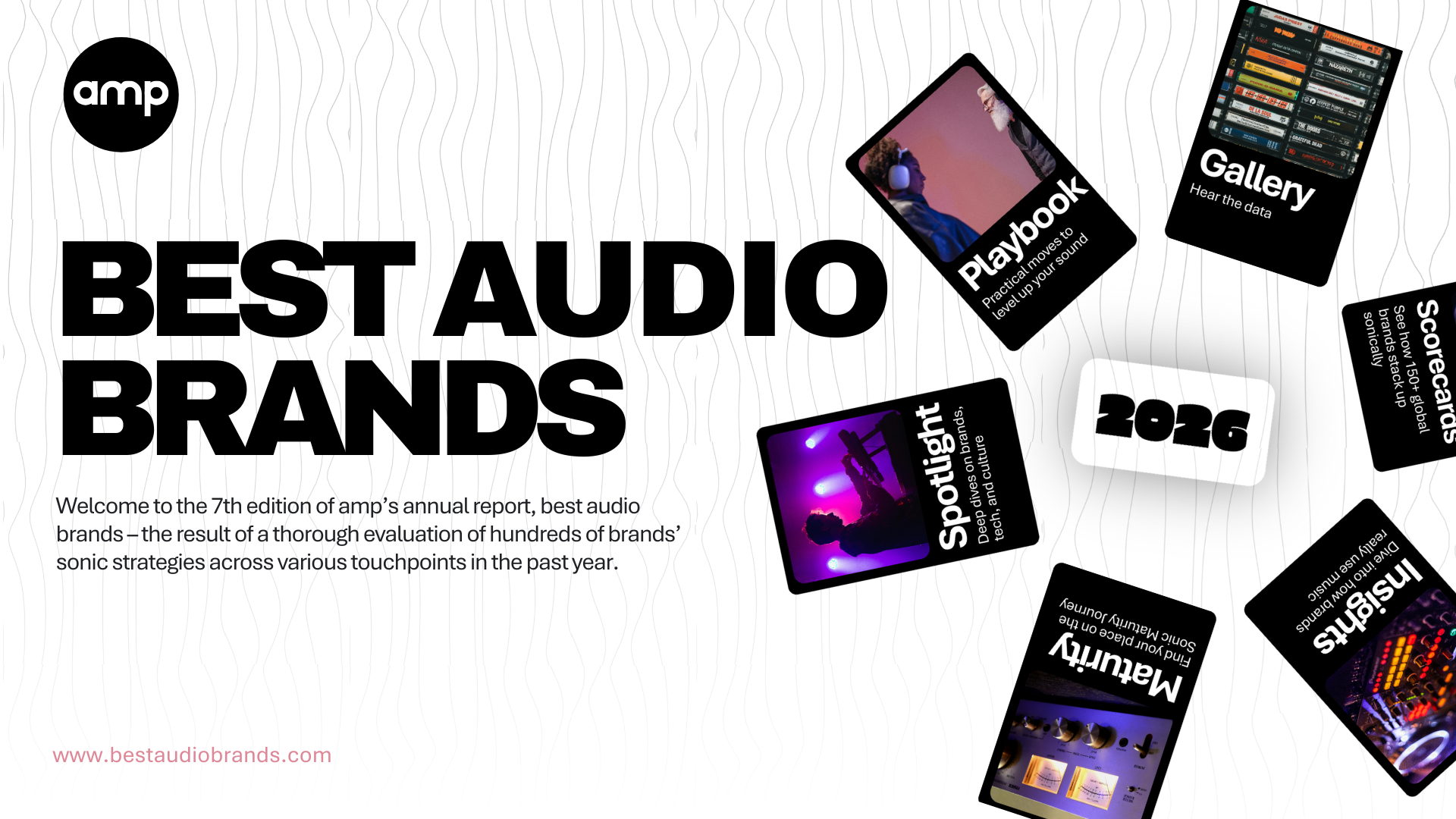
The latest report from sound branding company amp has revealed that, on average, brands use stock music in 61.9% of all content. And the result in a market as crowded and noisy as the one brands are in today is that most brands are sonically interchangeable, bordering on anonymous. The 2026 Best Audio Brands report reveals a critical, strategy-driven turning point: brands are turning away from building long-term sonic equity and towards chasing short-term, campaign-specific impact.
The report looked at over 150 global brands to glean insights about their sonic effectiveness with brands and sectors receiving a grade based on a number of select metrics. The weakest performers, graded D, were found to rely almost entirely on stock music coupled with silent content and minimal custom assets. For customers, this translated to sounding fragmented and overly functional. Healthcare (68.4%), travel and transportation (66.8%), and technology (64.0%) were found to be the most generic-sounding sectors.
It appears brands have misunderstood the role of sonic branding and many are treating it as a campaign garnish rather than a long-term strategic asset. Bjorn Thorleifsson, amp’s director of research and insights, says we are witnessing “a strategic pivot where brands are confusing unique audio with ownable audio.” Naturally, he has the data to back this up. “In 2025, investment in long-term ‘Owned Music’, assets the brand actually owns and reuses to build equity declined by 67%. Conversely, spending on ‘Custom Music’, which are bespoke tracks commissioned for single campaigns, soared by over 140%.”
Sonic Sugar Rush
What we can take away from this, according to Bjorn, is that brands “are willing to spend significant budget to sound high-quality for a specific 30-second spot, but they aren't investing in a sonic identity that lasts for 30+ years. They are prioritising a short-term ‘sugar rush’ of attention over the long-term health of their brand equity.” That's a problem for brands wanting to create a lasting impression and have very little time in which to do it.
Additional data from TikTok and System1 show early sonic cues drive both branding and conversion yet too many brands still aren’t codifying sound as seriously as visual identity, and losing out in the process. Bjorn sees the hesitation to often stem “from a misunderstanding of attention and a fear of repetition. Specifically, the fear of being ‘memed’ or annoying users on social platforms. However, recent ‘Compound Creativity’ research proves this fear is not only misplaced but costly.”
The research shows ‘disguised repetition’ to be ‘reliably pleasurable’, notes Bjorn, “and that brands prioritising consistency, including Soundtrack Commitment, create 4.8x more very large brand effects and 6x more profit growth. By failing to codify sound, brands aren't just losing mental availability and the ability to ‘stop the scroll’; they are actively forfeiting the ‘Compound Creativity’ dividend. While marketers fear ad wear-out, the data shows that assets actually ‘wear in’, building +15% distinctiveness annually. Brands that constantly change their sonic approach to chase trends are paying a ‘penalty of change’, effectively resetting their brand equity with every new campaign.”
Audio as Utility
Sectors like healthcare, travel and tech were found to struggle most with sonic distinctiveness, despite investing heavily in brand and customer experience. “These sectors struggle because they largely treat audio as a utility to fill silence rather than a branding asset,” states Bjorn. “Our data shows that healthcare, travel, and technology rely heavily on stock music; 68.4%, 59.3%, and 52.8% respectively. When the majority of your content uses generic, rented audio, you become sonically anonymous.”
There are outliers within these sectors, showing that things can be done differently.
“In the technology sector, Lenovo achieved an 'A' grade by utilising 56% owned music, a stark contrast to its peers and 60% sonic logo usage,” Bjorn reports, noting how Lenovo is “committing to a long-term sonic strategy that builds recognition over time.”
In travel, he draws attention to the airline, Saudia, which was “standout with a 'B' grade, achieving 32% sonic logo usage against an industry average of 10%, effectively using their logo as a consistent audio signature. In healthcare, GSK is attempting to break the mould with electronic, anthemic owned assets but the question remains if the identity is flexible enough.”
What’s working for these brands is “the discipline to reject the ‘generic default’ of stock music and the commitment to building a proprietary sonic library,” he adds.
In the race for short-term impact, a few factors are driving brands to abandon ownable sonic identities in favour of disposable, trend-led tracks. Bjorn sees the primary driver to be “the desire for contextual relevance over brand consistency” or something amp calls the ‘Custom Music Boom’. He explains that "highly competitive, consumer-facing sectors like CPG and automotive are prioritising the need to cut through the noise of specific, high-production campaigns. Marketers are commissioning audio that fits the specific visual narrative or emotional arc of a single ad, rather than doing the harder work of adapting a sonic identity to fit that mood.”
In practice it’s brands opting “to ‘rent’ a cultural vibe to make a splash in the moment, rather than building an asset they can own forever. It is a tactical decision that sacrifices long-term recall for immediate aesthetic fit.” We’ve all seen how quickly aesthetic trends and ‘-cores’ reach their zeniths and burn out, never to be mentioned again; playing into them without a robust long-term strategy will have the same effect on brands.
The Generic Default Problem
One of the most shocking data points from the report is that nearly 62% of content relies on stock music. How much brand value is being lost to sonic sameness? “A significant amount of attribution and recall is being sacrificed,” warns Bjorn. “Our report identifies stock music as the ‘generic default’. When brands rely on this, they are essentially paying to sound like everyone else.”
The value lost here is the ‘Sonic Watermark’ and this matters because “in an era of screenless devices, podcasts, and background listening, if a consumer hears a piece of content and cannot identify the brand without looking at a screen, that impression is wasted,” Bjorn explains. “By relying on stock music, brands are rendering themselves indistinguishable from their competitors, effectively voluntarily erasing their brand identity in the audio space.”
Having a coherent 'sonic system' in practice across platforms, products and short-form content is what builds brands’ sonic watermarks. “According to our Maturity Model, a ‘Master’ level system, exemplified by brands like Mastercard or Shell, moves beyond a rigid jingle. It starts with a sonic DNA, a central melodic motif that is flexible enough to be adapted to any touch point and any storytelling need.”
“In practice,” continues Bjorn, “this looks like the melodies being woven into a cinematic score for a TV commercial or YouTube video. On short-form platforms like TikTok, that same DNA is condensed into a punchy sonic logo that is front-loaded to trigger instant recognition. In the product realm, that sound appears as a payment confirmation or an app notification. The result is that the brand sounds different in every context to fit the mood, yet is instantly recognised as the same brand in every instance.” Therein lies the difference between a short-term ‘vibe’ a brand employs and the kind of thoughtful, strategic, and creative planning involved in building brands’ sonic identities over time and across platforms. Consistency wins out every time. In a market where everyone is shouting loudly and few are being heard, brands really can’t afford sonic anonymity.
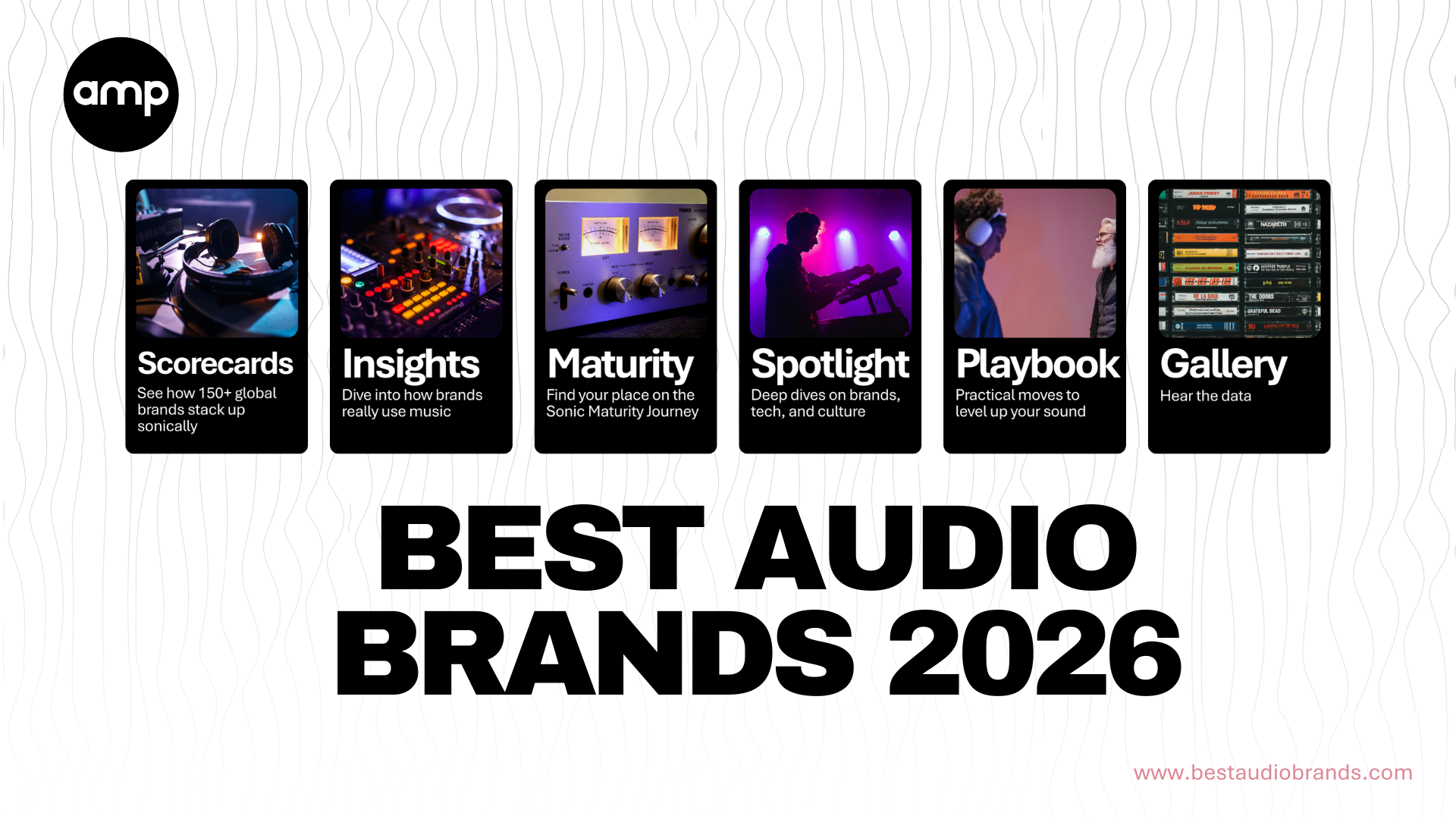
To learn more about which brands and sectors were graded highly, the reasons behind their success, and get an insight into the most successful sonic strategies, download the report here.